Non-Heavy-Duty vs. Heavy-Duty 16-Pin Harnesses
Choosing the right 16-pin harness is an important part of installing a Geotab GO device correctly. At first glance, heavy-duty and non-heavy-duty 16-pin harnesses may look similar because both are designed around an OBD-II-style connection. However, they are not the same. The correct harness depends on the vehicle type, diagnostic port, voltage system, device model, mounting style, and installation requirements.
Geotab’s own Harness Identification and Application documentation explains that different harnesses are designed for different vehicle categories and GO device generations. For GO10 and GO10 Plus installations, Geotab separates the 16-pin harness options into a light-duty version and a heavy-duty version, each with a specific use case.
What Is a 16-Pin Harness?
A 16-pin harness is an installation cable that connects a Geotab GO device to a vehicle’s 16-pin OBD-II diagnostic port. Instead of plugging the device directly into the port, a T-harness can relocate the device to a safer and more secure position while keeping the diagnostic port accessible for service work. Geotab notes that harnesses help accommodate different vehicle makes, models, connector positions, and port designs.
This matters because many vehicles have diagnostic ports located in tight, recessed, exposed, or driver-facing areas. In those cases, a harness can help prevent the device from interfering with the driver, reduce the chance of accidental unplugging, and support a cleaner installation.
The Main Difference: Vehicle Application
The main difference between a heavy-duty and non-heavy-duty 16-pin harness is the type of vehicle it is designed for.
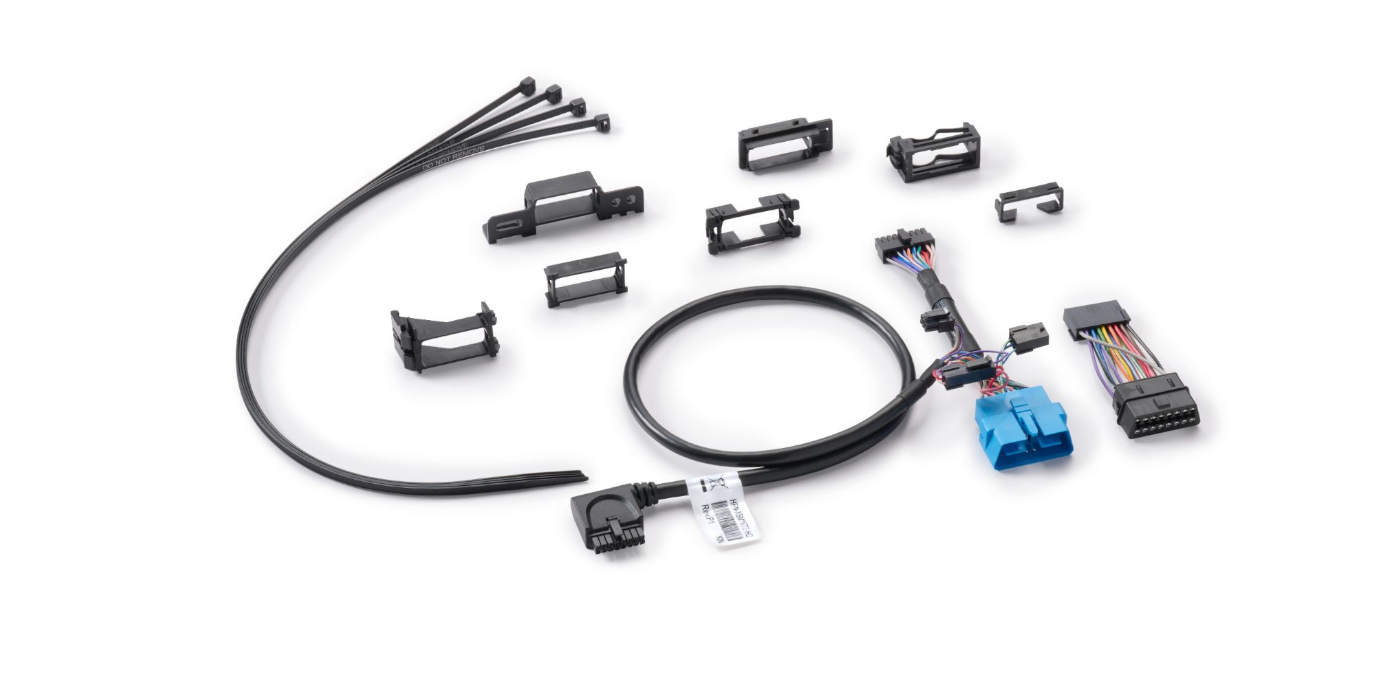
A non-heavy-duty 16-pin harness is generally used for light-duty vehicles such as cars, vans, and pickup trucks. Geotab’s 16-Pin Light Duty OBD-II T-Harness Kit for GO10 and GO10 Plus is specifically listed for light-duty vehicles and includes 11 mounting brackets for different vehicle configurations.
A heavy-duty 16-pin harness is designed for heavy-duty vehicles such as trucks and buses. Geotab’s 16-Pin Heavy Duty OBD-II T-Harness Kit for GO10 and GO10 Plus is specifically listed for heavy-duty vehicles and includes 6 mounting brackets suited for heavy-duty applications.
In simple terms, if the vehicle is a car, van, or pickup truck, it usually belongs in the light-duty category. If the vehicle is a commercial truck or bus, it may require the heavy-duty version, even if the port is still a 16-pin style connector.
Why Both Can Be 16-Pin but Still Different
The term “16-pin” describes the connector style, but it does not tell the whole story. Two vehicles can both have a 16-pin diagnostic port but still require different harnesses because the vehicle systems behind that connector may be different.
For example, Geotab’s light-duty GO10 harness uses a 12V-compatible red connector and is listed with a power output range of 8V to 12V. The heavy-duty GO10 harness uses a 24V-compatible blue connector and is listed with a wider power output range of 8V to 36V.
This is one of the biggest reasons not to choose a harness based only on the port shape. Heavy-duty vehicles often have different electrical systems, installation requirements, and diagnostic communication needs than light-duty vehicles.
Heavy-Duty 16-Pin Harness
A heavy-duty 16-pin harness is intended for trucks, buses, and other larger commercial vehicles that use a 16-pin diagnostic connection. For GO10 and GO10 Plus, the current heavy-duty option is the HRN-XGS16K2-HD. Geotab states that this harness is for heavy-duty vehicles only and that light-duty vehicles should use the light-duty version instead.
The heavy-duty harness is built to support heavier commercial vehicle environments. It includes mounting adapters such as North American flange mounts, European lock mounts, Asian snap-in options, MAN/DAF slide-and-lock, and heavy-duty Volvo slide mount options. These adapter choices help installers fit the harness properly across a range of truck and bus designs.
This harness is a good fit when a fleet operates vehicles such as straight trucks, buses, vocational trucks, or other heavy-duty platforms that use a compatible 16-pin port.
Non-Heavy-Duty 16-Pin Harness
A non-heavy-duty 16-pin harness is intended for lighter vehicles, including cars, vans, and pickup trucks. For GO10 and GO10 Plus, Geotab’s current light-duty option is the HRN-XGS16K2-LD. Geotab states that this harness is for light-duty vehicles only and that heavy-duty vehicles should use the heavy-duty version.
This harness includes mounting adapters for common light-duty and medium-duty installation styles, such as North American flange mount, North American snap-in mount, European lock mount, VW snap-in, BMW slide-and-lock, Ford round snap-in, and Volvo slide mount.
For fleets that operate service vans, pickup trucks, passenger vehicles, sales vehicles, delivery vans, or other lighter vehicles, the non-heavy-duty 16-pin harness is usually the correct category.
What About the Standard 16-Pin Harness?
Some fleets may also see references to the standard 16-pin T-harness, such as the HRN-GS16K22-A Standard 16-Pin T-Harness Kit. Geotab describes this harness as intended for most light-duty and medium-duty vehicles, but not for generic heavy-duty vehicle applications.
This is important because “standard” does not automatically mean “works with every 16-pin vehicle.” A standard 16-pin harness may be suitable for many light-duty and medium-duty vehicles, but heavy-duty trucks and buses may need a heavy-duty-specific 16-pin harness, a 9-pin Deutsch harness, a 6-pin harness, or another vehicle-specific option.
GPS Tracking America also lists an OBDII Universal T-Harness Kit for Geotab GO tracking devices, noting that it includes multiple mounting adapters for most light-duty and medium-duty international vehicles.
Why Choosing the Correct Harness Matters
Choosing the wrong harness can create installation and performance problems. The harness must match the vehicle’s diagnostic port, voltage system, mounting layout, and Geotab device model. If the wrong harness is used, the device may not connect properly, may be positioned poorly, may interfere with the driver, or may not support the correct vehicle data connection.
Geotab’s installation documents also warn that harnesses are intended for use only with compatible GO devices or Geotab-authorized accessories, and that professional installation may be required to help prevent personal injury or vehicle damage.
The right harness also helps preserve access to the diagnostic port. This is useful because mechanics and technicians may still need to connect scan tools during maintenance, inspections, troubleshooting, or repair work.
Heavy-Duty vs. Non-Heavy-Duty 16-Pin Harness Comparison
| Feature | Heavy-Duty 16-Pin Harness | Non-Heavy-Duty 16-Pin Harness |
|---|---|---|
| Typical vehicle type | Trucks, buses, heavy-duty commercial vehicles | Cars, vans, pickup trucks, many light-duty fleet vehicles |
| Example GO10 harness | HRN-XGS16K2-HD | HRN-XGS16K2-LD |
| Main purpose | Connect GO10 or GO10 Plus to heavy-duty 16-pin OBD-II ports | Connect GO10 or GO10 Plus to light-duty 16-pin OBD-II ports |
| Mounting adapters | 6 heavy-duty-focused mounting adapters | 11 light-duty-focused mounting adapters |
| Voltage compatibility | 24V-compatible connector, 8V to 36V power output range | 12V-compatible connector, 8V to 12V power output range |
| Best suited for | Commercial trucks, buses, and heavy-duty platforms | Service vans, pickups, cars, and light-duty fleets |
| Key caution | Not for light-duty cars, vans, or pickups | Not for heavy-duty trucks or buses |
How to Know Which Harness Your Fleet Needs
The safest way to choose a harness is to identify the vehicle, the Geotab device model, the diagnostic port type, and the electrical system before installation. Geotab provides a Harness Lookup Tool that helps identify required harnesses based on vehicle VIN, make, model, and year.
Fleet managers should also remember that heavy-duty vehicles do not always use 16-pin ports. Many heavy-duty vehicles use 6-pin or 9-pin diagnostic connectors. Geotab’s harness documentation includes a 9-pin heavy-duty harness option for GO10 and GO10 Plus, which is designed for heavy-duty vehicles with a 9-pin Deutsch diagnostic port.
Before ordering, it is best to confirm:
- Whether the vehicle is light-duty, medium-duty, or heavy-duty
- Whether the vehicle uses a 16-pin, 9-pin, 6-pin, or other diagnostic connector
- Whether the vehicle uses a 12V or 24V electrical system
- Which Geotab GO device model is being installed
- Whether the installation location requires a T-harness, straight harness, or special adapter
A Special Note for California Installations
For U.S. fleets, California installation rules should also be reviewed before choosing a harness. Geotab notes that, for GO10 devices, certain T-harness configurations cannot be installed in the State of California and that only straight harness installations are allowed in those cases.
This is another reason to work with a knowledgeable provider instead of assuming that any 16-pin harness will work in every vehicle or state.
The Bottom Line
The difference between a heavy-duty and non-heavy-duty 16-pin harness comes down to more than the number of pins. The correct harness must match the vehicle class, voltage system, diagnostic port, mounting requirements, and Geotab device model. A light-duty 16-pin harness is generally used for cars, vans, and pickup trucks, while a heavy-duty 16-pin harness is intended for trucks, buses, and other heavy-duty vehicles with compatible 16-pin ports.
Using the correct harness helps support a cleaner installation, more reliable data connection, better diagnostic port access, and a safer setup for drivers and technicians.
Get the Right Harness for Your Fleet
GPS Tracking America helps businesses choose and install the right Geotab tracking hardware for their vehicles, whether they operate light-duty service vans, pickup trucks, heavy-duty trucks, buses, mixed fleets, or specialized equipment. If you are unsure whether your fleet needs a heavy-duty 16-pin harness, a non-heavy-duty 16-pin harness, a 9-pin harness, or another Geotab installation accessory, contact us today. Our team can help you match the right Geotab device and harness to your vehicles so your GPS tracking solution is installed correctly from the start.
Frequently Asked Questions
What is a 16-pin harness?
A 16-pin harness is an installation cable that connects a Geotab GO device to a vehicle’s 16-pin diagnostic port. It allows the device to be installed securely while keeping the diagnostic port accessible.
What is the difference between a heavy-duty and non-heavy-duty 16-pin harness?
A heavy-duty 16-pin harness is designed for trucks, buses, and larger commercial vehicles, while a non-heavy-duty 16-pin harness is designed for cars, vans, pickup trucks, and lighter fleet vehicles.
Can heavy-duty and non-heavy-duty vehicles both have 16-pin ports?
Yes. Some heavy-duty and light-duty vehicles may both use a 16-pin diagnostic port, but that does not mean they use the same harness. Vehicle class, voltage, mounting style, and Geotab device compatibility still matter.
Which vehicles usually need a non-heavy-duty 16-pin harness?
A non-heavy-duty 16-pin harness is usually used for cars, service vans, pickup trucks, delivery vans, and other light-duty fleet vehicles.
Which vehicles usually need a heavy-duty 16-pin harness?
A heavy-duty 16-pin harness is usually used for larger commercial vehicles such as heavy-duty trucks, buses, vocational trucks, and other heavy-duty platforms with compatible 16-pin ports.
Why does the correct harness matter for GPS tracking?
The correct harness helps ensure proper device connection, reliable data flow, safer installation, easier service access, and better compatibility with the vehicle’s diagnostic and electrical systems.
Can I choose a harness just by looking at the connector shape?
No. The connector shape is only one factor. You should also consider the vehicle type, voltage system, diagnostic port, Geotab device model, and installation requirements.
What happens if the wrong 16-pin harness is installed?
Using the wrong harness may cause connection issues, poor device placement, unreliable data, installation problems, or compatibility concerns with the vehicle.
Are heavy-duty 16-pin harnesses only for 24V vehicles?
Heavy-duty harnesses are commonly associated with larger commercial vehicles and may support a wider voltage range, but the correct harness should always be confirmed based on the vehicle and Geotab device being installed.
Are non-heavy-duty 16-pin harnesses only for 12V vehicles?
Non-heavy-duty 16-pin harnesses are typically used with light-duty vehicles, which commonly use 12V systems. However, compatibility should always be verified before installation.
Does every heavy-duty truck use a 16-pin harness?
No. Many heavy-duty trucks use 6-pin or 9-pin diagnostic connectors instead of 16-pin ports. The required harness depends on the vehicle’s diagnostic connection.
What is a T-harness?
A T-harness allows a Geotab GO device to connect to the vehicle while keeping the diagnostic port available for mechanics, technicians, or service tools.
Why not plug the Geotab GO device directly into the diagnostic port?
Direct plug-in may work in some cases, but a harness can provide a cleaner, safer, and more secure installation, especially when the port is exposed, recessed, or located near the driver’s legs.
Can a 16-pin harness help protect the Geotab GO device?
Yes. A harness can move the device away from the exposed diagnostic port, reducing the risk of accidental unplugging, damage, or interference with the driver.
Do mixed fleets need different harness types?
Yes. A mixed fleet with cars, vans, pickup trucks, trucks, and buses may need multiple harness types depending on each vehicle’s diagnostic port and configuration.
Is a standard 16-pin harness the same as a heavy-duty 16-pin harness?
No. A standard 16-pin harness is not automatically suitable for heavy-duty vehicles. Heavy-duty vehicles may require a heavy-duty-specific 16-pin harness or another connector type.
How do I know which Geotab harness my vehicle needs?
The best approach is to confirm the vehicle make, model, year, VIN, diagnostic port type, voltage system, and Geotab device model before choosing a harness.
Should a professional install a Geotab harness?
Professional installation is recommended, especially for commercial fleets, heavy-duty vehicles, or vehicles with more complex diagnostic and electrical systems.
Can GPS Tracking America help me choose the right harness?
Yes. GPS Tracking America can help identify the right Geotab device and harness based on your fleet’s vehicles, diagnostic ports, and installation needs.
Who should I contact if I am unsure which 16-pin harness I need?
If you are unsure whether your fleet needs a heavy-duty 16-pin harness, non-heavy-duty 16-pin harness, 9-pin harness, or another Geotab accessory, contact us for help choosing the right solution.