
Fuel Cost Estimates: Understanding and Managing Fleet Fuel Spending
Fuel is a major operating expense for many commercial fleets, and changes in fuel prices can have a noticeable effect on a company’s bottom line. While telematics systems can provide information about fuel consumption, fuel economy, vehicle activity and idling, turning that information into a clear picture of operating costs can make fleet data more useful for planning and decision-making.
Fuel spending can be influenced by a wide range of factors, including vehicle utilization, driving behavior, operating conditions, fuel efficiency and changing market prices. When fleet managers can connect fuel usage with estimated costs, they have greater context for evaluating fleet performance and identifying areas that may warrant attention.
MyGeotab includes Fuel Cost Estimates within the Fuel and Energy Overview to give fleets a directional view of their fuel expenses. The feature combines vehicle fuel-use information with regional market fuel prices to estimate the cost associated with fuel consumption.
Why Tracking Fuel Costs Matters
Knowing how much fuel a vehicle consumes is useful, but consumption data alone does not always show the financial effect on a fleet.
For instance, a fleet manager may see that overall fuel consumption has increased compared with the previous month. Without an estimated cost attached to that increase, it may be harder to determine what the change means financially or explain its impact to business leaders.
Putting fuel usage into dollar terms can provide another layer of context. Fleet managers can look at fuel consumption alongside estimated costs to better understand how fuel efficiency, vehicle activity, idling and other operating conditions may be affecting expenses.
This information can also make it easier to discuss fleet performance with operations, finance and other departments that may be more focused on costs than vehicle-level metrics.
What Are Fuel Cost Estimates?
Fuel Cost Estimates is a metric available through the MyGeotab Fuel and Energy Overview.
The feature is designed to estimate fuel costs for gasoline and diesel-powered vehicles, along with plug-in hybrid electric vehicles when those vehicles are operating with their combustion engines. The calculation considers the vehicle’s fuel type and primary operating location and applies applicable regional or country-level market fuel prices.
These figures are not intended to represent an exact fuel purchase or replace a fuel-card statement. Instead, they provide an estimated financial value for the fuel a vehicle or fleet has consumed.
For businesses that already have detailed telematics data but do not have fuel transaction information integrated into their fleet management platform, this can provide additional visibility into the financial side of fuel consumption.
How Fuel Costs Are Estimated in MyGeotab
The calculation combines fuel-use information from the fleet with market-based fuel pricing.
Geotab sources fuel-price information weekly from Global Petrol Prices and matches the appropriate price to each vehicle based on its fuel type and primary operating location. The resulting figures are presented using the user’s local currency, with USD used when a currency conversion is unavailable.
Within the Fuel and Energy Overview, selecting the Fuel Cost Estimate metric provides a monthly trend covering the current year and the previous year.
Fleet managers can review individual months to see the estimated fuel cost and the market fuel price used in the calculation. This allows users to examine changes over time and put fuel spending trends into context rather than focusing only on a single month’s figure.
Which Vehicles Are Covered?
It applies to:
- Gasoline-powered vehicles
- Diesel-powered vehicles
- Plug-in hybrid electric vehicles while using their combustion engines
Battery electric vehicles, fuel cell electric vehicles, biodiesel, CNG, ethanol and LPG vehicles are not included in the Fuel Cost Estimate calculation.
Vehicle classification is also important within the Fuel and Energy Overview. MyGeotab uses powertrain classifications such as Internal Combustion Engine, Battery Electric Vehicle and Plug-in Hybrid Electric Vehicle to determine which measurements and calculations should apply to each vehicle.
When a vehicle does not have an assigned fuel type or powertrain group, gasoline pricing may be used by default for the estimate.
Fuel Costs and the Fuel and Energy Overview
Fuel Cost Estimates are part of the broader Fuel and Energy Overview in MyGeotab, which gives fleets access to several fuel, energy and emissions-related measurements in one place.
Depending on the vehicles and powertrains selected, the overview can provide information about:
- Fuel economy
- Fuel consumption
- Estimated fuel costs
- Energy usage
- Tailpipe emissions
- Emissions intensity
- Tailpipe emissions avoided through EV use
Fleet managers can filter the information by group, powertrain and date range to focus on specific vehicles or areas of the organization.
Bringing these measurements together can make it easier to examine fuel costs alongside the operational data that may be contributing to them.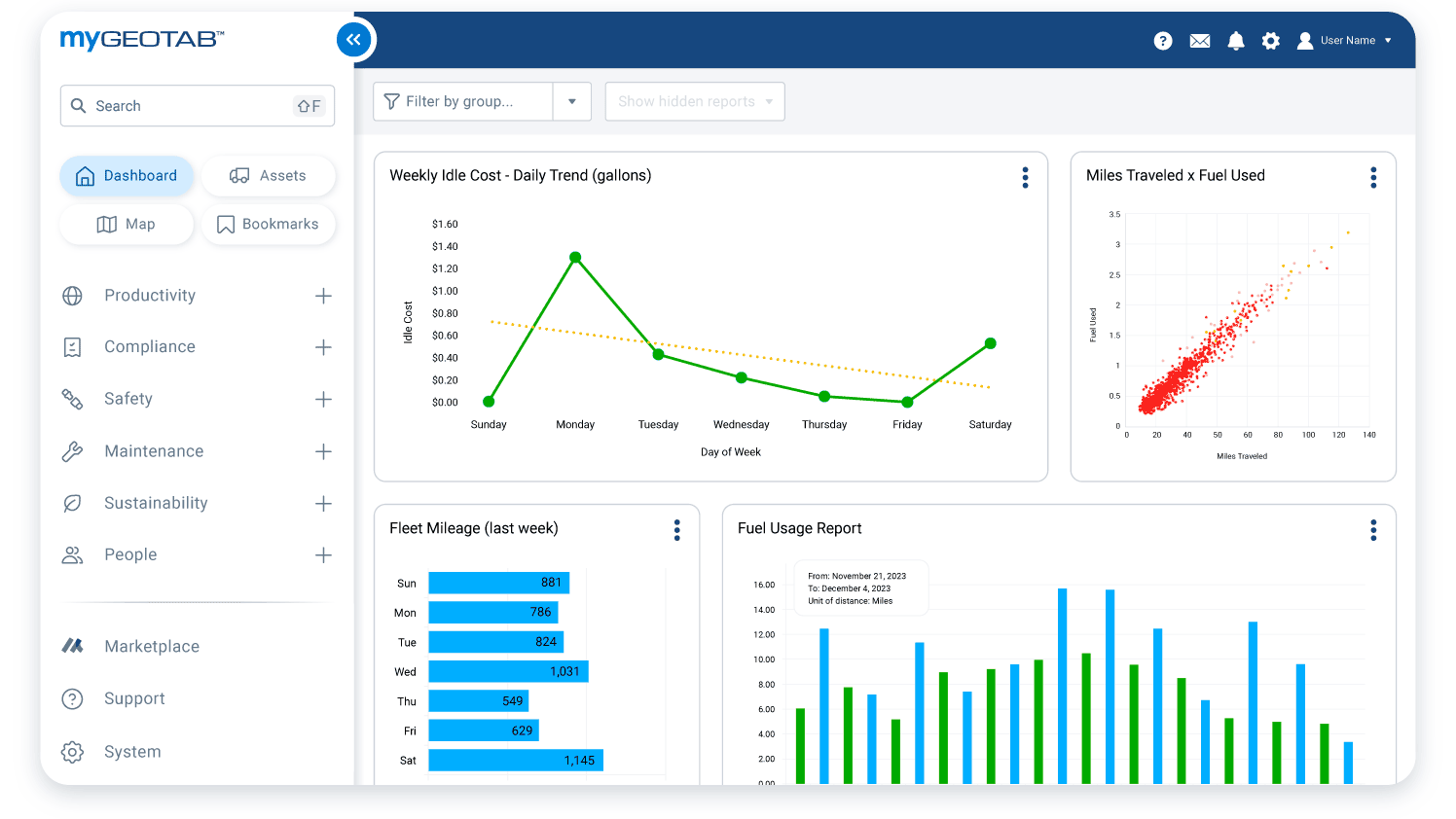
Finding Ways to Reduce Fuel Waste
Fuel-cost information becomes more valuable when it is considered alongside the vehicle behavior and operating patterns behind it.
For example, the Fuel and Energy Overview includes an Idling Reduction section that provides insight into fuel consumed while vehicles are idling. MyGeotab distinguishes potentially preventable idling events lasting between 10 and 60 minutes from other types of idling, including short engine warm-ups and longer periods of power-take-off operation.
This can help fleet managers investigate whether unnecessary idling is contributing to fuel consumption.
Fleet managers can also compare fuel use and fuel economy across vehicles, groups or departments. When one part of a fleet consistently shows higher consumption than comparable vehicles, the data can provide a starting point for further investigation.
Rather than simply tracking how many gallons are being consumed, fleets can use the data to look at the operating conditions and behaviors that may be driving those fuel costs.
Fuel Cost Estimates Do Not Replace Fuel Transactions
It is important to distinguish an estimated fuel cost from an actual fuel purchase.
The figures are calculated using market fuel prices rather than individual fuel-card transactions. Because of that, the estimated amount may differ from what a business actually pays at a fuel station.
Actual fuel expenses can vary based on the station used, negotiated pricing, taxes, discounts and other transaction-specific factors.
For that reason, these figures are most useful for understanding trends and providing financial context to fleet telematics data. They should not be treated as a substitute for accounting records or detailed fuel-card reporting.
How Fuel Data Can Help With Fleet Management
Looking at fuel consumption, fuel economy and estimated costs together can give fleet managers a broader view of vehicle operating performance.
This information can be used to investigate several areas of fleet management.
Changes in Fuel Consumption
If fuel use increases from one period to another, managers can look at vehicle utilization, routes, idling and other operating factors that may help explain the change.
Rising Fuel Expenses
Higher estimated fuel costs may be associated with greater fuel consumption, changes in market pricing or a combination of both. Reviewing monthly trends can help managers understand what is changing within the fleet.
Performance Differences Across Fleet Groups
Fuel and energy information can be filtered by fleet group, allowing managers to examine whether specific departments, regions or vehicle groups account for a larger share of fuel consumption.
Idling-Related Fuel Use
When idling accounts for a meaningful portion of fuel consumption, telematics data can help identify where driver coaching, operational changes or fleet policies may be worth considering.
Future Fleet Planning
The Fuel and Energy Overview also includes information that can support discussions about electrification. Fleets evaluating a transition to electric vehicles can consider fuel consumption, energy use and emissions-related information together when reviewing long-term fleet strategies.

Strengthen Fleet Safety With GPS Tracking America
Road risk can affect much more than driver safety. Collisions can impact vehicle availability, operating expenses, insurance claims, productivity and a company’s ability to respond effectively when an incident occurs.
GPS Tracking America provides fleet tracking and video telematics solutions designed to give businesses greater visibility into vehicle activity and driver behaviour.
Geotab GO Focus Plus combines AI-powered video, telematics and driver coaching to help fleets identify risky behaviour, provide immediate feedback and investigate incidents with greater context.
Contact us to learn more about GO Focus Plus and other fleet safety solutions for your operation.
Frequently Asked Questions
What factors can cause fleet fuel costs to increase?
Fuel expenses can change based on fuel prices, vehicle utilization, fuel economy, excessive idling, driving conditions and other operating factors. Reviewing these variables together can help fleet managers understand what may be contributing to higher fuel costs.
How can a fleet monitor fuel consumption?
Telematics can provide visibility into fuel use, fuel economy, distance traveled and other vehicle activity. MyGeotab’s Fuel and Energy Overview brings several of these measurements together and allows managers to filter the information by fleet group, powertrain and date range.
What does fuel economy tell fleet managers?
Fuel economy shows how efficiently a vehicle uses fuel over a given distance. Comparing fuel economy between similar vehicles or fleet groups can help identify vehicles with higher consumption that may deserve further investigation.
Does idling use fuel?
Yes. A vehicle can continue consuming fuel while the engine is running even when it is stationary. MyGeotab provides idling information that can help fleets understand how much fuel is being used during idle periods.
How can fleets identify potentially unnecessary idling?
MyGeotab separates certain idling events lasting between 10 and 60 minutes into a potentially preventable category. Other idle activity can include short engine warm-ups or extended power-take-off operation, allowing managers to examine where idling may be contributing to fuel use.
How are fuel prices selected for vehicles?
MyGeotab uses weekly fuel-price information from Global Petrol Prices and matches pricing based on the vehicle’s fuel type and primary operating location. For vehicles operating in the United States, pricing can be based on the state where the vehicle spends the most time.
Can vehicles in the same fleet have different fuel costs?
Yes. Differences in fuel type, operating location, fuel efficiency, mileage and vehicle utilization can cause two vehicles in the same fleet to have different estimated fuel costs.
Are plug-in hybrid vehicles included in the fuel-cost calculation?
Plug-in hybrid vehicles are included when they are operating with their combustion engines. MyGeotab can also provide separate energy information for the electric portion of a plug-in hybrid’s operation.
Are battery electric vehicles included in fuel-cost calculations?
Battery electric vehicles are not included in the conventional fuel-cost calculation. MyGeotab instead provides energy-related information for EVs, including energy usage and tailpipe emissions avoided.
Can fleet managers compare fuel performance between groups?
Yes. Fuel and energy information can be filtered by MyGeotab groups, allowing managers to compare performance across departments, regions, vehicle groups or other organizational categories.
Why might fuel information appear to be missing or inaccurate?
Data availability can be affected by processing timing, vehicle classification and other account settings. Reviewing powertrain assignments and allowing time for monthly data processing can help when fuel information does not appear as expected.
Why is vehicle classification important?
MyGeotab uses powertrain classifications such as Internal Combustion Engine, Battery Electric Vehicle and Plug-in Hybrid Electric Vehicle to determine which fuel and energy measurements apply to each vehicle. Incorrect or missing classifications can affect the information displayed.
Will estimated fuel costs match fuel-card records?
Not necessarily. The calculation uses market-based fuel prices rather than the exact prices from individual fuel transactions. Fuel-station pricing, discounts, taxes, negotiated rates and other factors can cause actual expenses to differ from the estimate.
Why might a fuel report differ from information shown in MyGeotab?
Differences can result from processing timing, archived-vehicle settings and the way fuel information is attributed using trip data. Reports and dashboard information may therefore require additional context when individual results are compared.
How often is fuel and energy information updated?
The Fuel and Energy Overview is updated monthly. Information for the previous month is generally available within the first few days of the following month.
Can fuel data help with fleet budgeting?
Fuel-consumption and cost trends can provide useful context when reviewing operating expenses and planning future fleet costs. Since the figures are estimates rather than transaction records, they should be used for planning and trend analysis rather than as a replacement for accounting data.
How can managers identify vehicles that may be using too much fuel?
Fleet managers can compare fuel economy, fuel consumption and vehicle activity among similar vehicles. Assets that consistently perform differently from comparable vehicles may warrant further investigation into utilization, idling, operating conditions or maintenance.
Can telematics help reduce fuel waste?
Telematics can help identify patterns associated with unnecessary fuel use, such as excessive idling or lower fuel efficiency. These insights can support driver coaching, operational adjustments and other fuel-management efforts.
Can fuel data help evaluate electric vehicles?
Yes. Fuel and energy information can help businesses compare conventional fuel use with EV energy consumption and emissions-related data when evaluating potential electrification opportunities.
Can fuel and energy information be exported from MyGeotab?
The Fuel and Energy Overview itself does not provide a direct export option, but information such as fuel usage, fuel economy and EV energy data can be accessed through related MyGeotab reports, including the Fuel and EV Energy Usage Report.