Monitoring Speeding with Geotab

Monitoring Speeding with Geotab
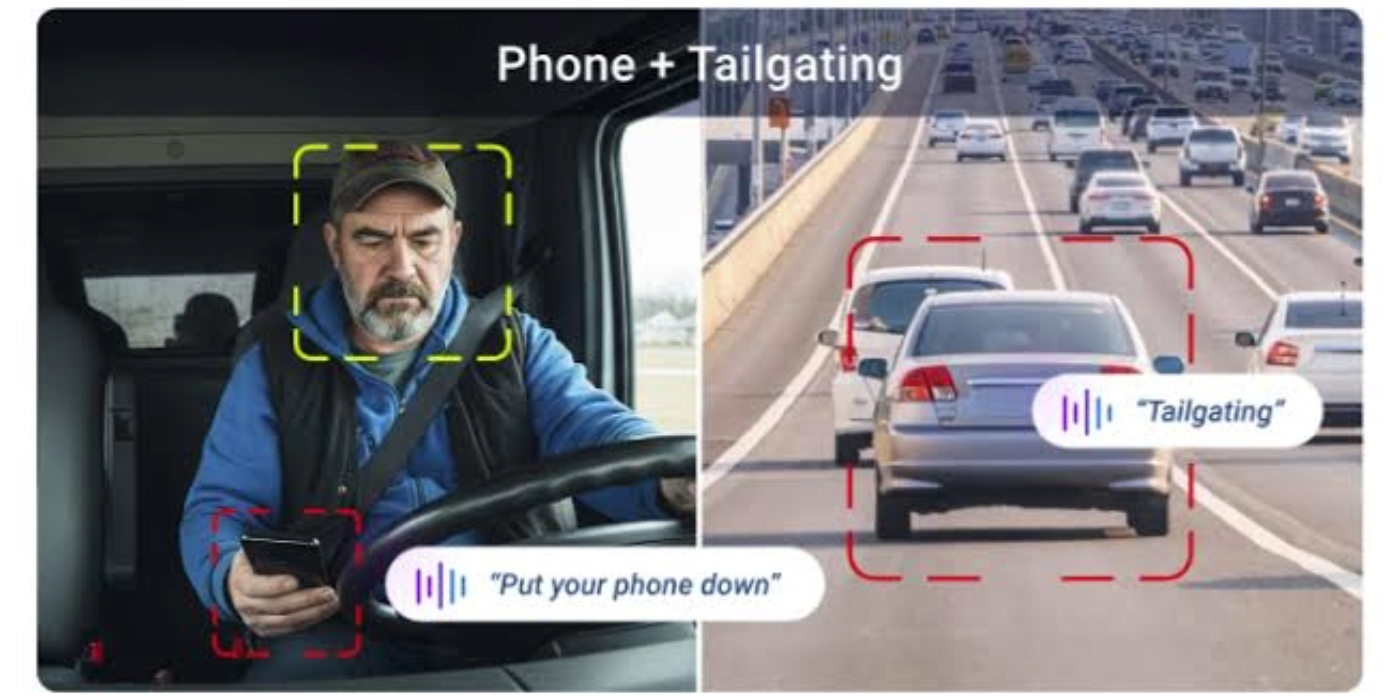
Speeding is among the most common fleet risks, and one of the easiest to reduce. Geotab covers it in three ways within a single platform: posted road speed shows how drivers compare with the real speed limit, exception reports and alerts flag rule violations, and in-cab alerts correct drivers while it’s happening.

Exceptions and Reporting: See Every Violation in Context
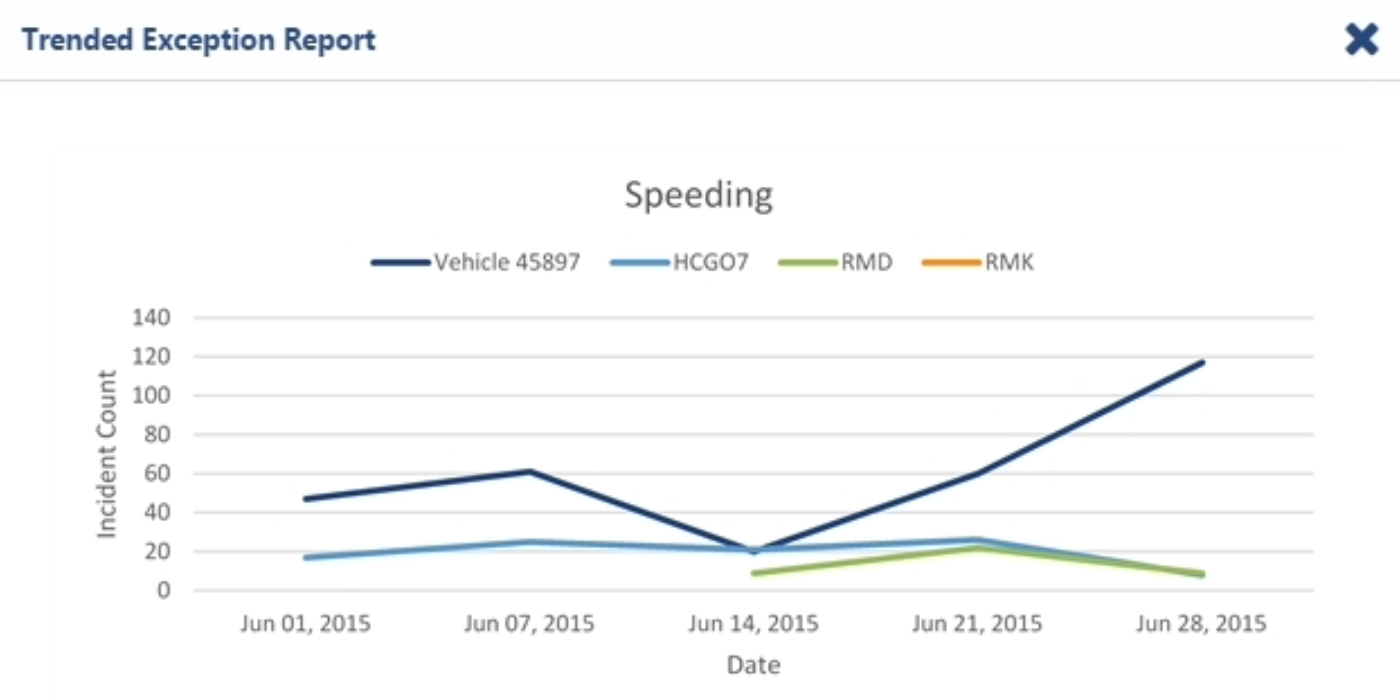
Whenever a vehicle breaks a speeding rule, MyGeotab logs it as an exception event. There are several ways to review these events:
- Trips History: Warning-triangle markers in the rule’s color show up in the trip log, and the vehicle’s route on the map changes to that color wherever the rule was violated.
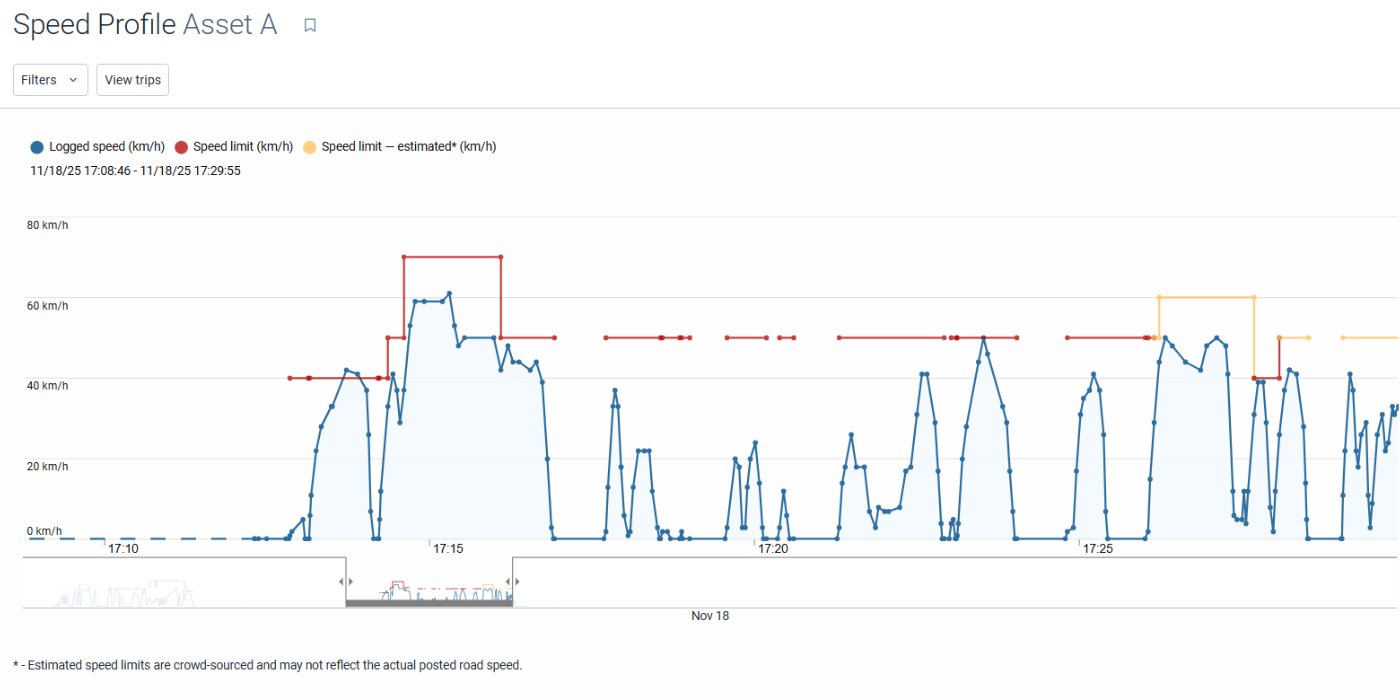
- Speed Profile: This built-in report plots the vehicle’s speed against the road’s limit, so you can see where the vehicle was over and for how long.
- Exceptions Detail Report: Pull details for any date range and export them to Excel or PDF for managers, insurers, or driver reviews.
- Real-time notifications: Send events immediately to a list of recipients by email or within the system, or feed them into your own tools through the MyGeotab Data Feed API.
Combine these with Geotab’s alerting system so the right person is notified the moment serious speeding occurs.
Build Speeding Rules That Match Your Fleet
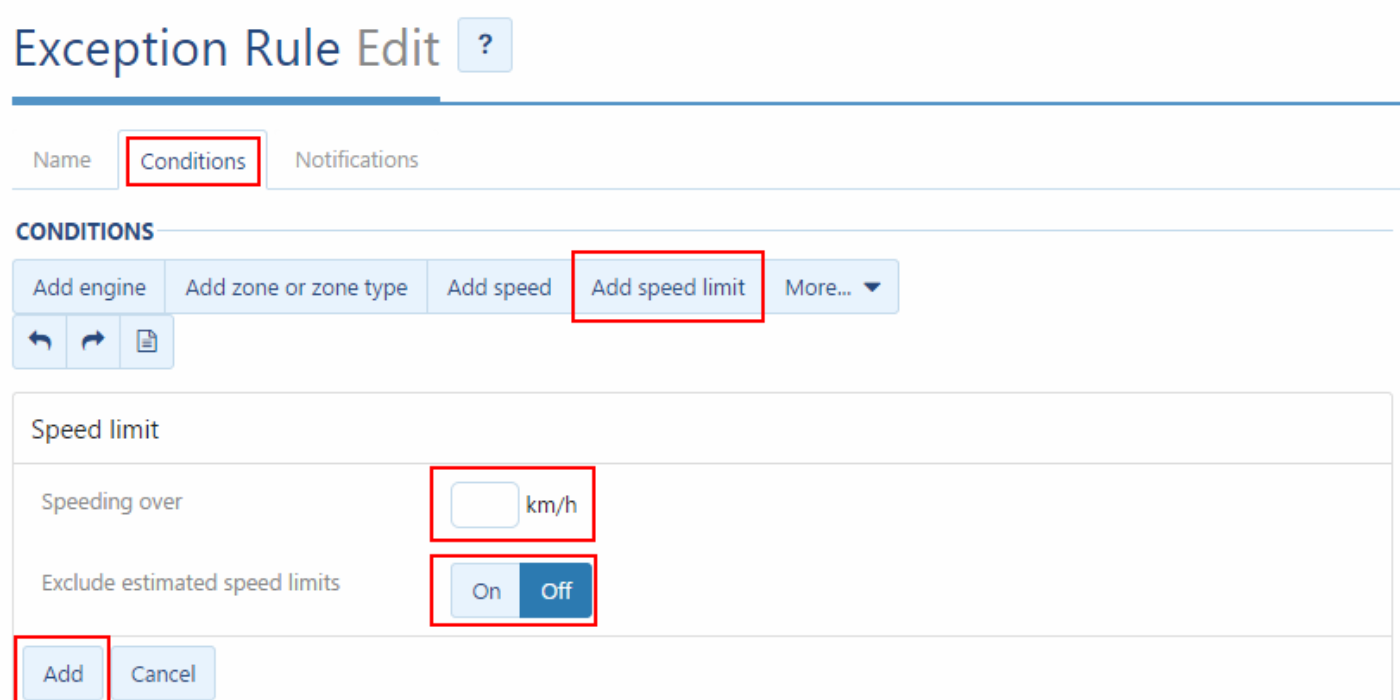
MyGeotab rules constantly evaluate incoming GPS and telematics data against the conditions you define. Turn on a built-in stock rule to get started fast, or copy it into a custom rule that reflects your policy. Custom rules can be built in the plain-English rule editor or in the advanced conditions editor.
Examples of What You Can Configure
- Exceed the posted limit by a set margin: Trigger only when a vehicle is more than 10 mph over the posted limit.
- Skip low-speed zones: Evaluate speeding only when the vehicle is traveling above 45 mph and is also 10 mph over the posted limit.
- Flag sustained speeding only: Add a time or distance condition, such as traveling above 35 mph for more than one minute, so brief spikes don’t clutter your inbox.
Beyond Individual Events: Speeding as Part of Overall Fleet Risk
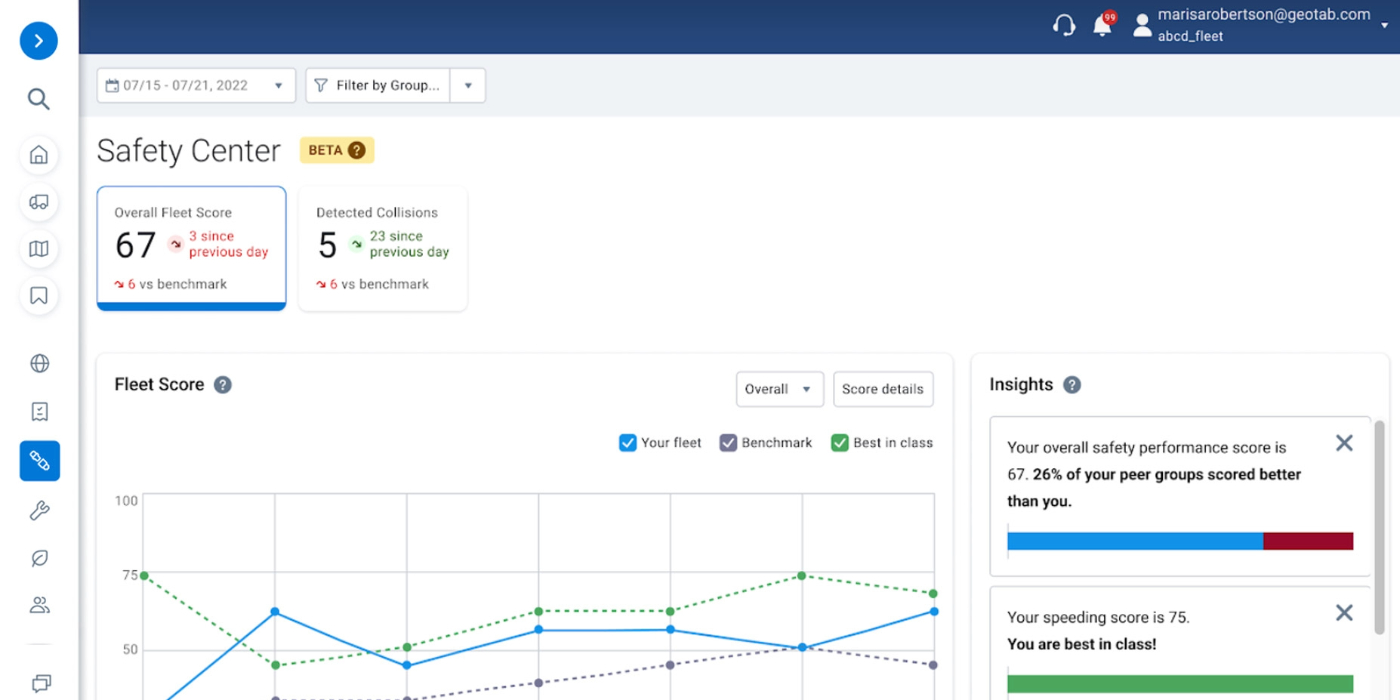
Speeding is one of several behaviors that raise collision risk, along with harsh braking, hard acceleration, and sharp cornering. The Geotab Safety Center brings these together in risk analytics and lets you compare your fleet’s speeding and other behaviors with similar fleets. Begin with the speeding tools covered here, then turn to the Safety Center for the full picture and to prioritize your coaching.
Want to Learn More?
Questions about posted road speed, speeding rules, exception reports, or in-cab alerts? Our team is happy to help. Contact us today to find out how we can help your fleet cut down on speeding, coach drivers with confidence, and run a safer, more cost-effective operation.
Frequently asked questions
How does Geotab know the speed limit of the road?
Geotab blends NAVTEQ and OpenStreetMap posted speed data, then looks at where the vehicle was before and where it went next to identify the right road. That context helps it separate a highway from the frontage road running alongside it.
How accurate is Geotab's posted road speed?
According to Geotab, posted road speed can be trusted for roughly 99% of trips. A small number of roads have missing or incorrect limits, so it’s wise to verify important exceptions before you act on them.
What is the difference between a speeding exception and an alert?
An exception is the record MyGeotab logs when a vehicle violates a rule, like speeding. An alert is the notification that goes out about it. You can look back through every exception in reports whenever you like, and decide which ones also notify your team.
Can I be notified in real time when a driver is speeding?
Yes. Rule events can go out right away by email or inside the system to the people you pick. The Geotab device can also sound a beep in the vehicle so the driver hears about it immediately.
Does the in-cab beep use the posted speed limit?
No. The in-cab threshold is a fixed speed that you set on the device. Rules that compare a vehicle’s speed to the posted limit are set up in MyGeotab.
Should I use in-cab alerts, posted-speed rules, or both?
Combining them gives you the best coverage. The in-cab beep works as a fixed ceiling, such as a company-wide maximum, and corrects drivers on the spot. Posted-speed rules in MyGeotab reveal who is exceeding the real limit and by how much.
What speeding reports does Geotab include?
Three tools handle most needs. Trips History marks speeding events on the trip log and the map. Speed Profile charts a vehicle’s speed against the road’s limit. The Exceptions Detail Report lists violations for any date range and exports to Excel or PDF.
Can I see exactly where a vehicle was speeding?
Yes. Trips History shows warning-triangle markers in the rule’s color, and the vehicle’s route on the map changes color wherever the rule was broken. Speed Profile then shows how long the vehicle stayed over the limit.
Can I export speeding reports?
Yes. You can run the Exceptions Detail Report for any time frame and export it to Excel or PDF, which works well for managers, insurers and driver reviews.
Can I customize what counts as speeding?
Yes. Rules can be based on how far over the posted limit a vehicle is, with a minimum speed so slow zones are ignored, plus time or distance conditions so only sustained speeding gets flagged. For instance, you could trigger only when a vehicle is more than 10 mph over the posted limit.
Do I have to build speeding rules from scratch?
No. You can turn on a built-in stock rule to get going quickly, or copy it into a custom rule that fits your policy. Custom rules can be created in the plain-English rule editor or the advanced conditions editor.
Why am I getting too many speeding events, and how do I fix it?
Usually the threshold is set too low, or the rule catches very short spikes. Raising the margin over the posted limit and adding a time or distance condition, such as driving above a set speed for more than a minute, keeps your report focused on clear or dangerous violations.
If I change a speeding rule, will I lose my past events?
Editing an existing rule clears its historic events, since they may not be valid under the new settings. You can reprocess a reasonable date range to bring them back, and large requests are typically handled after hours. Check with us before changing a rule you depend on for reporting.
Can I send speeding data to other software?
Yes. Besides email and in-system notifications, rule events can be pulled into your own tools through the MyGeotab Data Feed API.
Can I use speeding exceptions for driver coaching or disciplinary conversations?
Yes. Exception reports and Speed Profile give you specific events to go over with a driver, and in-cab alerts provide feedback without a manager involved. Since a small portion of posted speed data can be missing or wrong, confirm any exception that might lead to discipline before acting on it.
How does speeding monitoring connect to the Geotab Safety Center?
Speeding is one of several behaviors that raise collision risk, along with harsh braking, hard acceleration and sharp cornering. The Safety Center combines these in risk analytics and lets you compare your fleet with similar fleets. Begin with the speeding tools, then use the Safety Center for the bigger picture and to prioritize coaching.
Can your team help me set up speeding rules?
Yes. We can help you pick a sensible starting rule, adjust it after the first few weeks of data, and guide you through rule changes so you don’t accidentally lose reporting history. Contact us to get started.