Geotab Advanced Engine Data
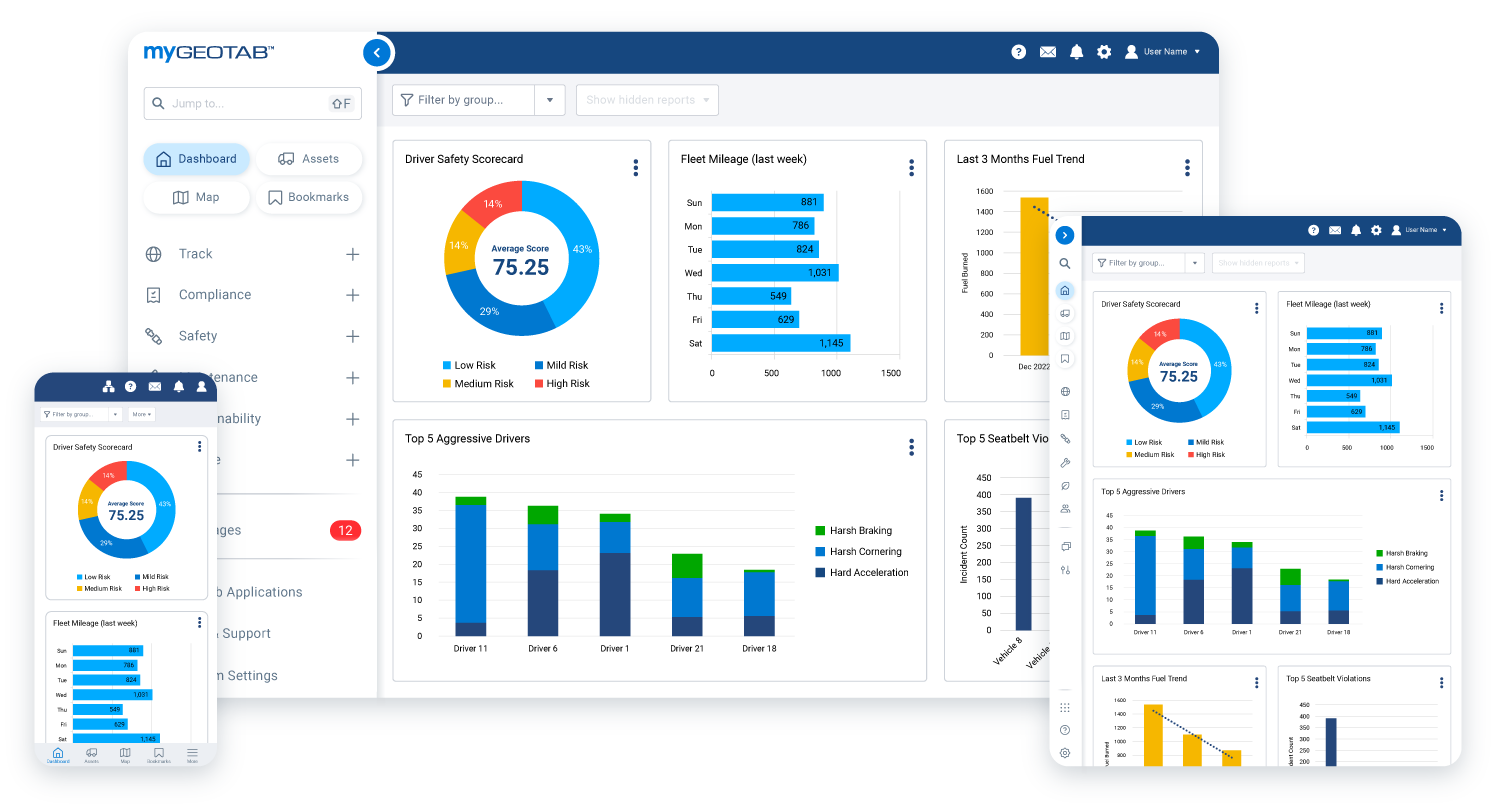
Geotab advanced engine data gives fleet managers greater visibility into the mechanical condition and operation of their vehicles. A compatible Geotab GO device can communicate with supported vehicle systems across major engine protocols and transmit information such as coolant temperature, engine RPM, check engine light status, diagnostic faults, and battery voltage to MyGeotab. By bringing engine health and GPS fleet data together, Geotab helps organizations identify developing issues, improve maintenance decisions, and manage vehicles using objective information instead of relying only on driver reports or dashboard inspections. Data availability depends on the vehicle, GO device, installation, engine protocol, and service plan.
Detect Potential Engine Problems Earlier
Geotab engine diagnostics can help maintenance teams recognize warning signs before they contribute to roadside failures or more extensive damage. Elevated coolant temperature may indicate a developing cooling-system problem, while check engine light status and diagnostic trouble codes can identify conditions that require investigation. MyGeotab displays fault information reported by the vehicle or GO device, including the source and applicable protocol, so fleet managers can provide technicians with more useful information when scheduling an inspection. Engine data supports earlier intervention, but it should complement professional diagnosis rather than replace it.

Monitor RPM to Improve Vehicle Operation
Engine RPM data helps fleets understand how engines are being operated during everyday trips. Repeated high-RPM activity may indicate over-revving, inefficient driving, demanding operating conditions, or the need for additional driver coaching. Geotab uses intelligent curve-based logging to capture changes in engine speed and other supported measurements while limiting redundant records. Reviewing RPM alongside location, speed, idling, and trip information gives managers better context for evaluating vehicle use, improving operating practices, and protecting fleet assets.
Use Battery Voltage and Coolant Data to Support Preventive Maintenance
Battery voltage and coolant temperature provide valuable indicators of vehicle health. Voltage data can help identify low-battery conditions that could contribute to starting problems, while coolant temperature trends can reveal possible overheating or cooling-system concerns. Geotab allows supported measurements to be reviewed in MyGeotab and can use diagnostic conditions in fleet rules and notifications. This helps maintenance teams prioritize vehicles that may need attention, reduce unnecessary inspections, and make preventive maintenance decisions using actual operating data.

Put Geotab Engine Intelligence to Work for Your Fleet
Geotab advanced engine data turns information from supported vehicle systems into practical fleet-management insight. With coolant temperature, RPM, check engine light status, battery voltage, and other available diagnostics in MyGeotab, your team can respond to warning signs sooner, plan maintenance more effectively, and better understand how every vehicle is performing. Compatibility varies by vehicle, device, protocol, installation, and rate plan. Contact us at GPS Tracking America to confirm supported engine data for your fleet and find the appropriate Geotab solution for your operational needs.
What is Geotab advanced engine data?
Geotab advanced engine data is vehicle information collected by a compatible Geotab GO device and transmitted to MyGeotab. Depending on the vehicle and configuration, this information can include coolant temperature, engine RPM, check engine light status, battery voltage, diagnostic trouble codes, fuel data, engine hours, and other supported measurements.
How does Geotab collect engine data?
A compatible Geotab GO device connects to the vehicle’s diagnostic system and communicates with available electronic control modules. It interprets supported signals, records relevant changes, and transmits the information to MyGeotab for authorized users to review.
Which engine protocols does Geotab support?
Depending on the GO device model, Geotab supports major light-, medium-, and heavy-duty vehicle protocols such as OBD-II, ISO 15765 CAN, J1939, J1708/J1587, ISO 9141-2, ISO 14230, and certain manufacturer-specific protocols. Protocol support varies by device, vehicle, model year, connector, and installation method.
Can Geotab monitor engine coolant temperature?
Yes. Geotab can record engine coolant temperature when the vehicle makes that signal available through a supported protocol. Reviewing temperature measurements can help maintenance teams identify possible overheating or abnormal cooling-system performance that requires inspection.
Can Geotab monitor engine RPM?
Yes. Compatible vehicles can report engine speed, commonly measured in revolutions per minute, to Geotab. RPM data can help fleets identify over-revving, examine engine operation, understand demanding duty cycles, and support driver coaching or maintenance decisions.
Can Geotab detect when the check engine light turns on?
Yes. On supported vehicles, Geotab can record check engine light status and related engine faults. Fleet managers can use this information to identify affected vehicles and arrange an appropriate inspection instead of waiting for the condition to be reported manually.
Are check engine light status and diagnostic fault codes the same?
No. Check engine light status indicates whether the warning light has been activated, while a diagnostic trouble code provides more specific information about the detected condition. A vehicle may report one or both types of information depending on its systems and Geotab compatibility.
What engine fault information can MyGeotab display?
MyGeotab can display supported diagnostic trouble codes and details such as the fault description, status, source, controller, protocol, date, and affected vehicle. Some manufacturer-specific faults may have limited descriptions and require further interpretation by a qualified technician.
Can Geotab monitor vehicle battery voltage?
Yes. Geotab can record supported battery or telematics-device voltage measurements. Because a GO device normally receives power from the vehicle, this information can help identify low-voltage conditions, possible battery drain, charging-system concerns, or electrical issues that should be investigated.
Can MyGeotab send a low-battery warning?
MyGeotab can use supported voltage measurements in rules and notifications to alert designated users when configured conditions are met. Voltage thresholds and time requirements should be selected according to the vehicle type, electrical system, operating conditions, and maintenance procedures.
Can Geotab send alerts about engine problems?
Yes. Authorized users can configure rules and notifications for supported conditions such as engine faults, low voltage, high RPM, or other available diagnostic measurements. Notifications can help the appropriate team respond sooner, but their availability depends on the vehicle data and system configuration.
Where can I view engine measurements in MyGeotab?
Authorized users can review supported measurements through the Maintenance area of MyGeotab. Available diagnostic records can be filtered by vehicle, diagnostic type, and date range, while engine faults can be reviewed separately to help maintenance teams investigate reported problems.
How frequently does Geotab record engine data?
Geotab does not use one fixed reporting interval for every engine measurement. GO devices can use intelligent curve-based logging to record changes as needed, reducing redundant data while preserving an accurate representation of supported measurements. Frequency can also vary by device, connection, vehicle, and data source.
Is Geotab engine data available in real time?
Some engine information can be transmitted quickly, but it should not be assumed that every measurement is continuously live. The timing depends on the device, rate plan, cellular connection, intelligent logging behavior, vehicle protocol, and whether the data comes from a GO device or an OEM integration.
Can advanced engine data help prevent vehicle breakdowns?
Advanced engine data can help fleets recognize warning signs and arrange inspections before some conditions become more serious. However, it cannot predict or prevent every breakdown. Its value comes from giving maintenance teams earlier, objective information to support timely decisions.
How does engine data improve preventive maintenance?
Engine data helps maintenance teams base decisions on actual vehicle operation and condition. Coolant temperature, RPM, engine hours, fault codes, voltage, and other available measurements can help prioritize inspections, investigate recurring problems, and refine maintenance schedules.
Can Geotab advanced engine data support a mixed fleet?
Yes. Geotab’s support for multiple engine protocols allows compatible data from many light-, medium-, and heavy-duty vehicles to be viewed in MyGeotab. The exact measurements will not be identical for every vehicle, so compatibility should be checked for each make, model, year, and powertrain.
Will every vehicle report coolant temperature, RPM, faults, and battery voltage?
No. A vehicle must make each measurement available through a protocol supported by the installed GO device. Data availability can also depend on the vehicle model and year, powertrain, harness, installation, firmware, OEM restrictions, and Geotab service plan.
Does Geotab engine data replace a professional vehicle diagnosis?
No. Geotab engine data is intended to support fleet monitoring and maintenance decisions. Warning lights, fault codes, abnormal temperatures, or voltage readings should be evaluated by a qualified technician using the vehicle manufacturer’s diagnostic and repair procedures.
How can GPS Tracking America help my fleet use advanced engine data?
GPS Tracking America can help evaluate vehicle compatibility, select suitable Geotab devices and harnesses, configure MyGeotab, and identify useful engine measurements, rules, alerts, and reports. Contact us to discuss your fleet and determine which advanced engine data features are available for your vehicles.